
Long considered the preserve of a few large organizations, sports sponsorship is currently experiencing a particularly strong surge in activity. Driven by changing donation practices and the rise of participatory sponsorship, it has established itself as a strategic tool for sports organizations.
This trend is not merely a hunch: it is now well documented.
A trend confirmed by the figures
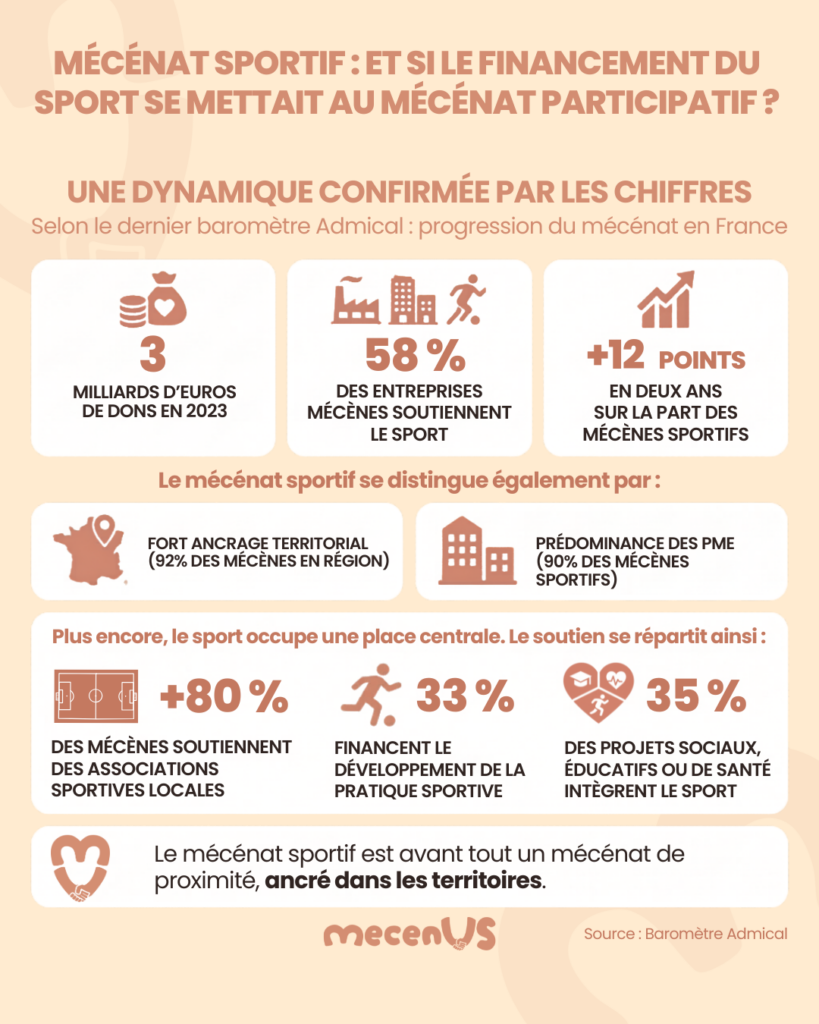
According to the latest survey published by Admical, corporate philanthropy continues to grow in France:
- €3 billion in donations in 2023
- 58% of corporate sponsors support sports
- A 12-point increase over two years in the share of sports sponsors
Sports sponsorship is also distinguished by:
- strong regional roots (92% of sponsors are based in the regions)
- a predominance of small and medium-sized enterprises (90% of sports sponsors)
Corporate philanthropy is now an integral and long-term part of companies’ engagement strategies.
What's more, sports play a central role in this process:
- More than 80% of sponsors support local sports organizations
- 33% fund the development of sports
- 35% of social, educational, or health projects now incorporate sports
Sports sponsorship is, above all, a form of community-based sponsorship, deeply rooted in local communities.
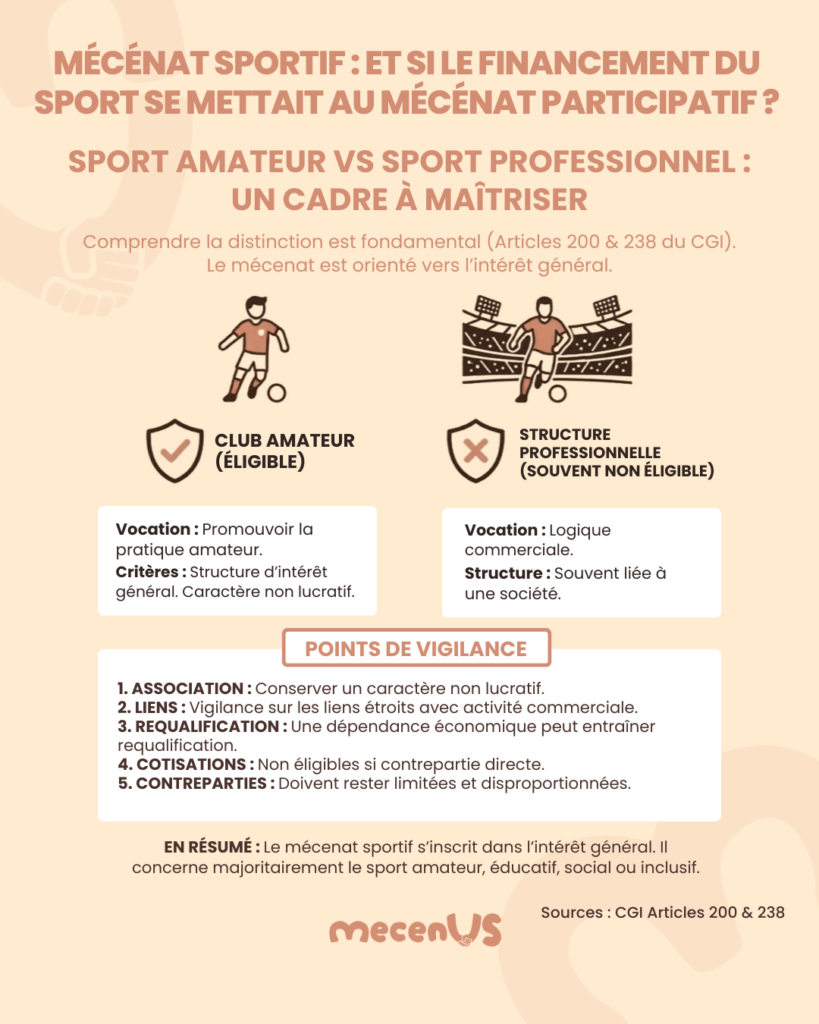
Amateur sports vs. professional sports: a framework to master
A fundamental point (often misunderstood) concerns the distinction between amateur and professional sports. Indeed, according to Articles 200 and 238 of the General Tax Code, “the institution or organization receiving donations must be of a {..} sporting nature {..}” And according to another legal source, this sporting nature refers to organizations whose purpose is to promote the practice of amateur sports, in particular amateur sports clubs.
Sponsorship is therefore primarily focused on amateur sports, insofar as it must benefit an organization serving the public interest.
In practice, amateur sports organizationsmay be eligible for corporate sponsorship. On the other hand, organizations associated withprofessional sportsoften operate on a commercial basis.
You should therefore pay close attention to the following points:
- A sports organization must remaina nonprofitto be eligible
- it may lose that status if it maintains too close ties to a commercial activity
- An entity affiliated with a professional club (through a corporation or an economic dependency) may be reclassified as a gainful activity
Furthermore,membership duesdo not constitute sponsorship when they represent a direct consideration
Finally, thebenefits provided to patrons must remain limited and not disproportionate. Otherwise, the relationship would constitutesponsorship.
In short, sports sponsorship is driven by the public interest. As such, it primarily supportsamateur, educational, social, or inclusive sports.
Crowdfunding: Defining a New Model
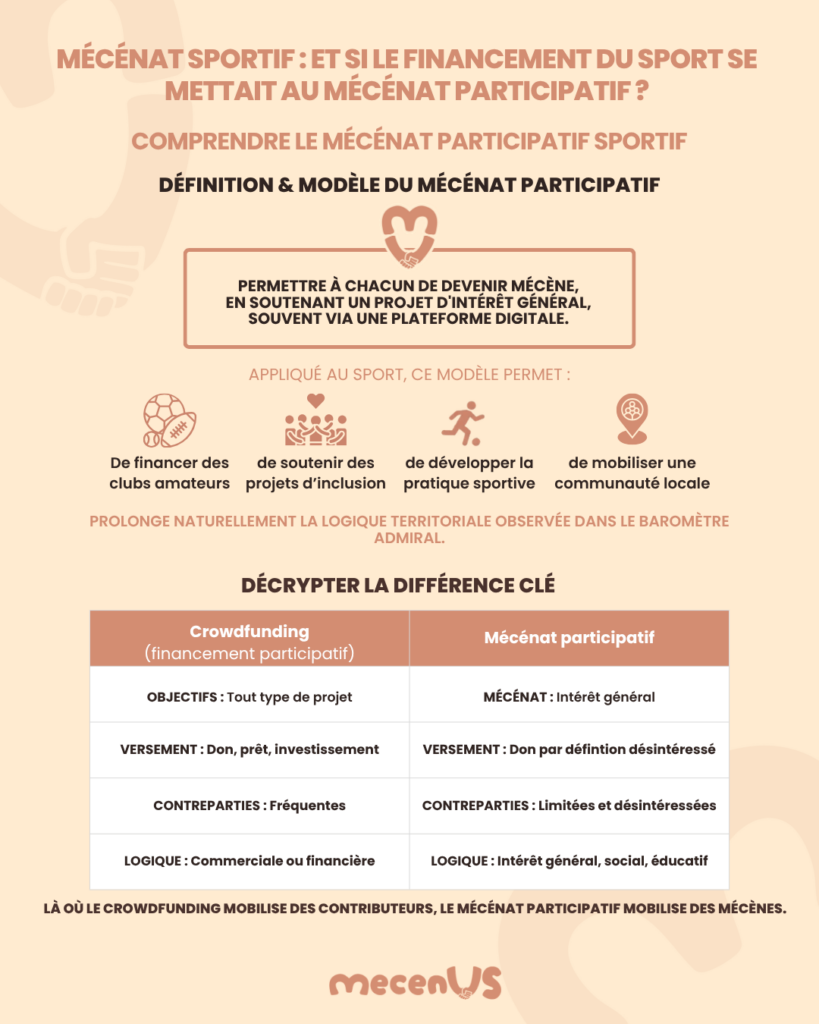
In this context, the definition of participatory philanthropy takes on its full meaning: it is about enabling anyone to become a patron by supporting a project of public interest, often through a digital platform.
When applied to sports, this model allows for:
- to fund amateur clubs
- to support inclusion projects
- to promote sports participation
- to mobilize a local community
Participatory philanthropy is a natural extension of the regional trends observed in the Admical survey.
The Difference Between Crowdfunding and Participatory Philanthropy
The difference between crowdfunding and participatory patronage is crucial.
Crowdfundingallows you to raise funds from a wide audience online to finance any type of project.
It can take various forms, such as a donation (with or without a reward), a loan, or an investment. In crowdfunding, rewards are common, and the rationale can be commercial or financial
Conversely,participatory philanthropy is limited to projects of public interest (see our latest webinar on the topic: What Is a Public Interest Organization?), is based on a donation (which, by definition, is unselfish), and effectively entitles the donor to a tax benefit.
Whereas crowdfunding brings together contributors, participatory patronage brings together patrons.
Why develop a sports sponsorship strategy?
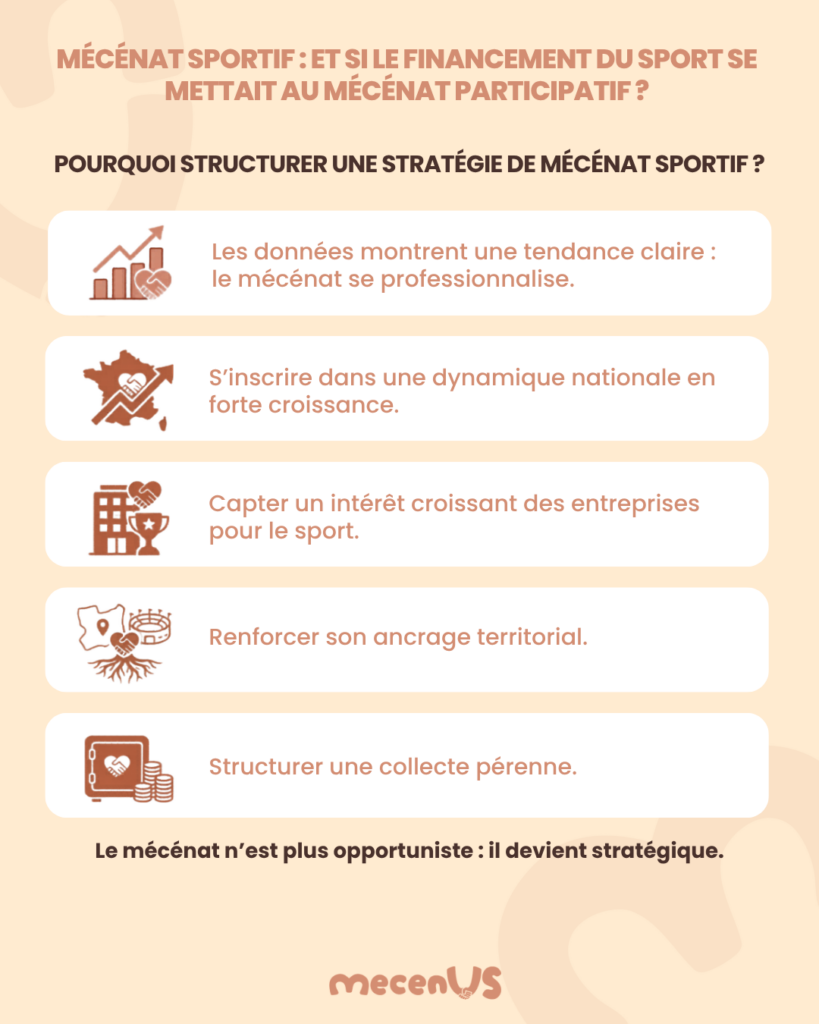
The survey data show a clear trend: corporate philanthropy is becoming more professional.
Today, developing a sports sponsorship strategy makes it possible to:
- to be part of a rapidly growing national trend
- to tap into the growing interest in sports among businesses
- to strengthen its local presence
- to establish a sustainable fundraising program
Philanthropy is no longer opportunistic; it is becoming strategic.
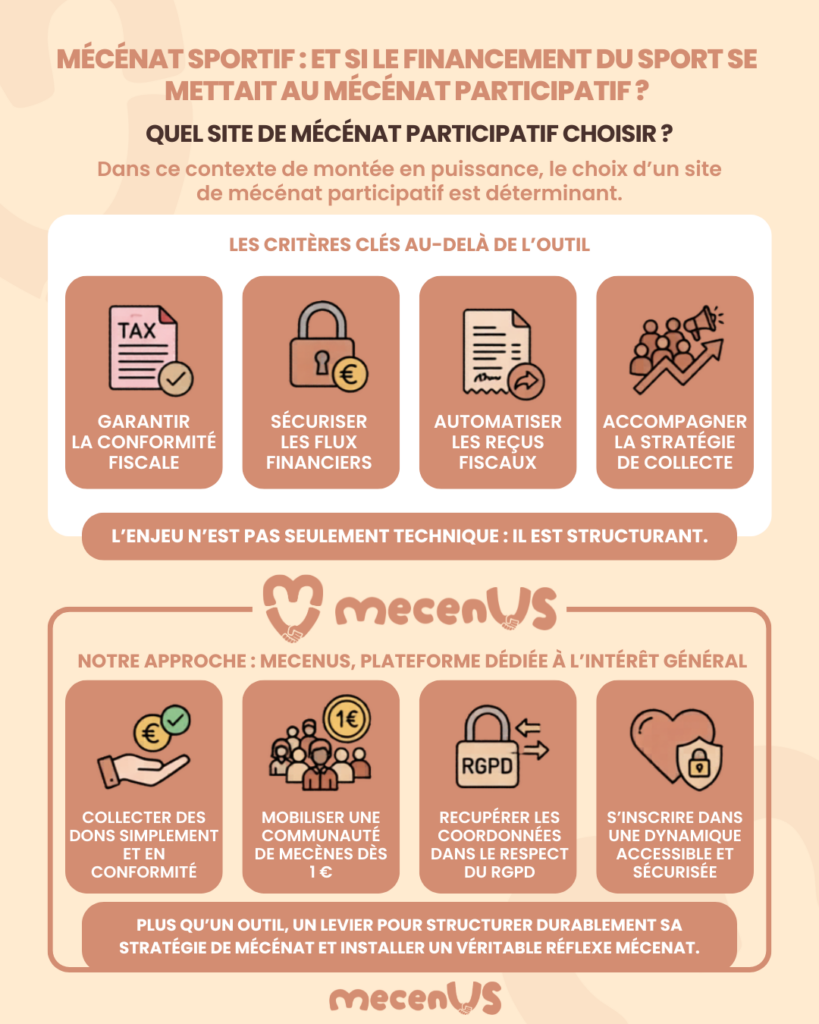
Which participatory sponsorship site should you choose?
Given this growing trend, choosing a crowdfunding platform is crucial.
Beyond the tool itself, it’s about:
- ensure tax compliance
- secure financial flows
- automate tax receipts
- support the fundraising strategy
The issue is not merely technical; it is fundamental.
With this in mind, some platforms offer an approach specifically designed to serve the public interest.
This is particularly true of MecenUS, a French platform dedicated to private funding for public interest projects, which enables:
- to collect donations easily and in compliance with tax regulations
- to build a community of donors, starting at just €1
- to collect donors' contact information in compliance with the GDPR
- to become part of an accessible and secure participatory sponsorship initiative
More than just a tool, it serves as a catalyst for building a sustainable corporate philanthropy strategy and fostering a genuineculture of philanthropy.
Crowdfunding and "sports heritage"
Community-based heritage sponsorship also applies to sports. It helps restore sports facilities, highlight historic sites, and preserve the local sporting heritage. Sponsorship thus becomes a tool for passing on this heritage.
Toward a Culture of Philanthropy in Sports
The Admical Barometer reveals a profound shift: philanthropy is becoming second nature. Given its social and community-based nature, sports is particularly well-positioned to embody this transformation. Participatory philanthropy amplifies this momentum by making giving more accessible, broadening the base of donors, and fostering a committed community.
Sources
This article draws in particular on the following references:
- Admical –2024 Corporate Philanthropy Barometer
- Admical: Sports Sponsorship—Industry Profile—Wilfried Meynet
- Article 200 of the General Tax Code:https://www.legifrance.gouv.fr/codes/article_lc/LEGIARTI000053543932
- Article 238 bis of the General Tax Code:https://www.legifrance.gouv.fr/codes/article_lc/LEGIARTI000051217200
- BOFiP-Taxes:https://bofip.impots.gouv.fr/bofip/10963-PGP.html